Using AI to tackle scope 3 emissions: opportunities, limits, and the role of supplier engagement

Find out how AI can help businesses tackle scope 3 emissions, as well as its limitations.

As a Climate Strategy Advisor at Normative, I work with organizations across sectors, geographies, and maturity levels to design decarbonization strategies and put them into practice. Throughout this work, there’s one question that keeps coming up: “How can we deliver both comprehensive and accurate carbon emissions calculations throughout our supply chain?” There’s a good reason why this has emerged as a common theme. In nearly every case, scope 3 emissions dominate, often accounting for more than 90 per cent of a company’s total footprint, with a large proportion of this often attributed to Purchased Goods and Services (PG&S). But navigating global supply chains to collect this data, amidst a lack of standardization in supplier reporting, can make it difficult to tackle scope 3 emissions effectively. On top of this complexity, regulators, investors and customers are putting these organizations under increasing pressure to deliver more accurate reporting on supply chain emissions. Many organizations are turning to AI as a solution to these data challenges.
While there is plenty of optimism that AI can accelerate progress by replacing spend-based estimates with supplier-specific data, it cannot create data where none exists. The real opportunity lies in understanding what AI does well, where its limits are, and how to use it as part of a broader supply chain strategy.
AI in practice: what it can and can’t do
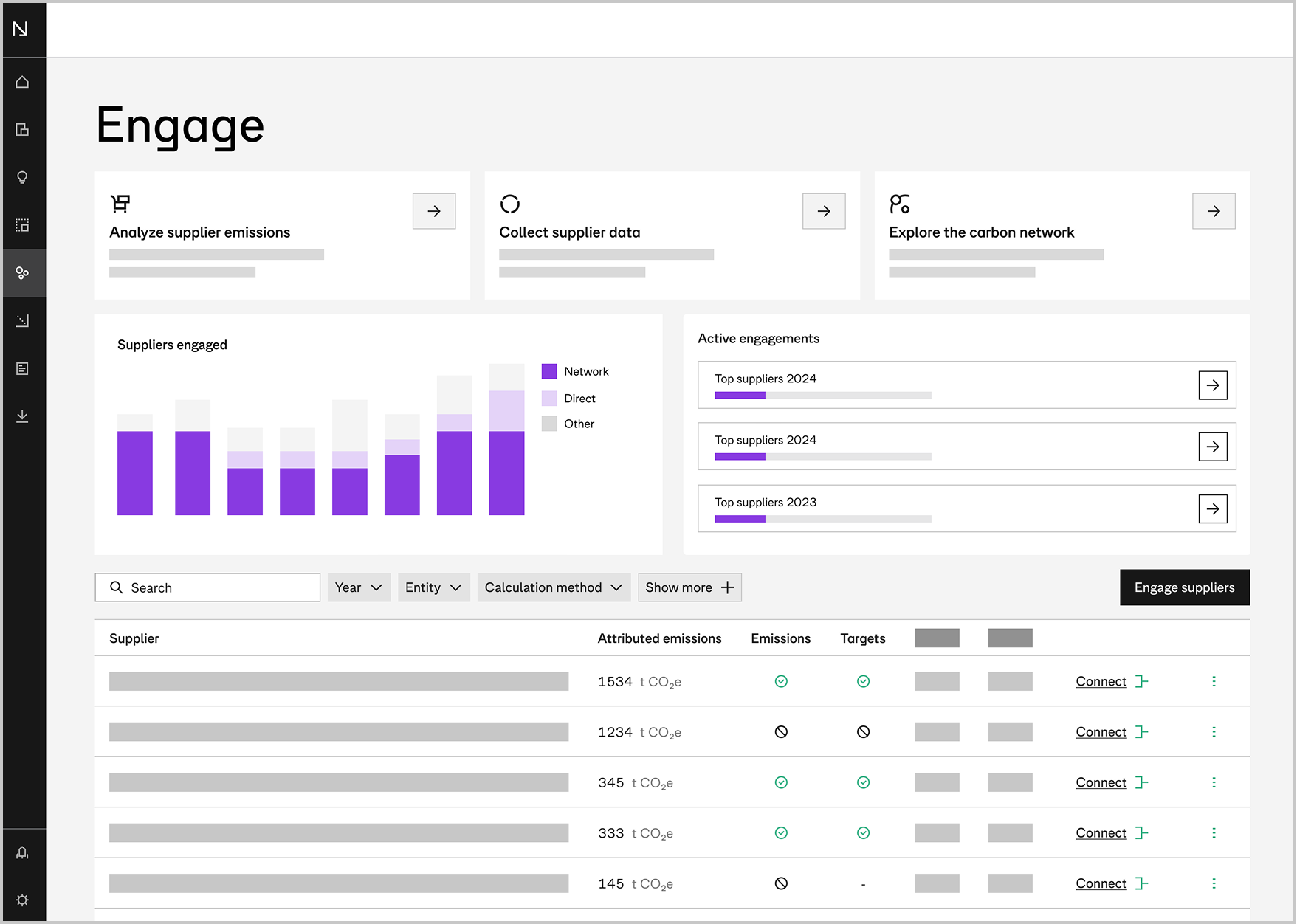
There’s no question that AI is transforming how sustainability teams operate. It can quickly analyze large sets of data, find publicly available data, identify supplier disclosures, and even flag inconsistencies or missing information. These capabilities make it a valuable ally in reducing the manual burden of data collection. However, one misconception I often encounter is that AI can “fill in the blanks”, that it can generate supplier emissions data even when none exists. This is where expectations need to be reset. AI can only find and interpret what is already publicly available; it cannot create credible data where none has been reported.
So rather than asking whether AI can replace supplier engagement, the more relevant question is: “How can AI help us make that engagement smarter, faster, and more focused?”
What AI does well
From a practical standpoint, AI shines in several areas that directly support supply chain decarbonization:
| Use case | What AI enables | Considerations |
|---|---|---|
| Public data discovery | Quickly identifies which suppliers have ESG reports, CDP submissions, or published emission data. | Only captures what’s publicly available, no proprietary data access. |
| Information extraction | Scans long sustainability reports to locate scope 1–3 data, methodologies, and audit status. | Requires precise prompts and validation checks. |
| Anomaly detection | Flags questionable entries (e.g. zero emissions in high-impact categories). | Still needs human judgment to interpret context. |
| Data matching & enrichment | Connects supplier names to databases or classification systems for consistent tracking. | Risk of false positives; requires traceability. |
| Trend identification | Aggregates historical disclosures to highlight emission trends and outliers. | Predictions may vary depending on data quality. |
In other words, AI is an accelerator; it helps sustainability teams focus on insights rather than admin work. With the correct supporting wheels, it can tell you where to look and what to question, but not what to believe without further verification.
Why AI alone is not enough
Even with advanced tools, AI cannot replace the fundamentals of good carbon accounting. Decarbonization is a long-term, collaborative process that requires human judgment, context, and relationship-building.
First, many suppliers that our customers work with, particularly SMEs, have no emissions data at all. AI can’t fill that gap. In these cases, proactive engagement is the only path forward.
Second, not all data found by AI is usable or trustworthy. Public disclosures can vary significantly in quality, completeness, and verification status.
Examples of potentially questionable data include:
- A supplier reporting zero emissions for a category where it is typically material (e.g. 0 tCO₂e for Purchased Goods & Services).
- A lack of a detailed methodology explaining how emissions were calculated.
- No external validation, for example, the data hasn’t been third-party audited or doesn’t align with established frameworks such as CSRD (mandatory) or SBTi (voluntary).
This last point is especially relevant, as the Science Based Targets initiative (SBTi) is proposing that external assurance will become a prerequisite for target validation in its next standards update (currently under consultation).
Using questionable or unverified data can expose your organization to audit failures, regulatory scrutiny, or reputational damage. To avoid this, it’s essential to define what your organization considers “usable” data based on your internal risk tolerance and reporting obligations.
So, having established the strengths and weaknesses of AI, how do you incorporate it into a watertight strategy for engaging suppliers?
How to build a robust supplier engagement strategy
Establishing the fundamentals of supplier engagement is key to taking control of your supply chain and mitigating associated risks. A robust strategy should include the following steps:
- Foundation & baseline
- Establish a baseline: Create an initial emissions baseline using your currently available data. Even spend data will allow you to quickly identify your highest-impact suppliers, which should be your primary prioritization targets. AI can be a powerful tool in your arsenal for performing this initial assessment of which supplier has publicly available data.
- Define usability: Just because a supplier data point is available does not automatically mean it is usable. You must set your company’s minimum data requirements based on your specific risk appetite (you can learn more about this in the next section).
- Prioritization & goals
- Prioritize impact: Start with your top emitters, but remember that achieving true decarbonization requires systematic work across your entire value chain.
- Embed sustainability in procurement: Set clear procurement guidelines and embed sustainability criteria into every decision, especially for key suppliers. For instance, require suppliers above a certain financial threshold to provide sustainability data and set near-term and long-term targets. These requirements can also include a commitment to external validation standards like SBTi.
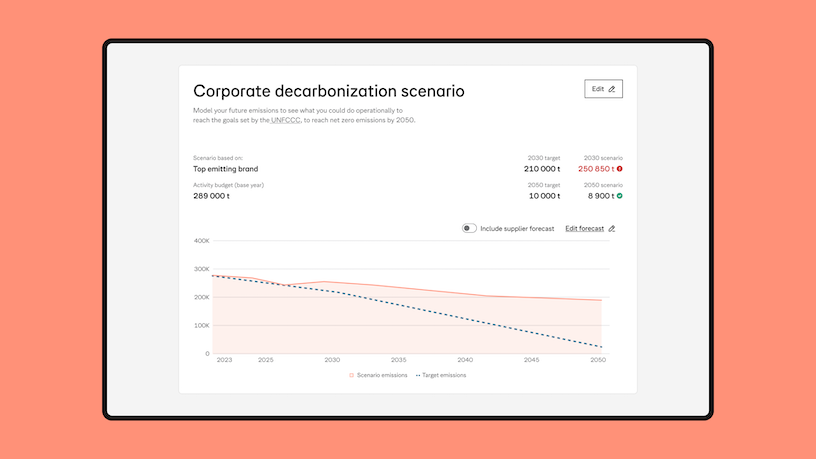
- Set clear timelines: Define your goals (e.g., near-term targets) and work backwards. Always include sufficient buffer time, as the process takes longer than expected. For example, if you have a near-term target for 2030, you should aspire for your top suppliers (accounting for more than 50% of your Purchased Goods and Services emissions) to be providing accurate data and having submitted to SBTi by 2027.
- Implementation & governance
- Implementation approach: Based on your baseline analysis, identify which suppliers to prioritize and determine the appropriate engagement method based on your internal resources. Do you prefer to utilize active enforcement or a passive enforcement strategy?
- Leverage contracts: Contractual agreements are not just for financial clauses; they are a great governance tool to support the decarbonization of your supply chain. Continuing the example above, you could formally include the ambition for your top 50 suppliers to provide accurate data by 2027 within their contracts.
- Leverage rewards: Incentives, ranging from preferential contract terms to shared expertise, can be a powerful tool, particularly for retaining key suppliers who are difficult to replace.
- Educate and support: Recognize that not every supplier is at the same maturity level. You must work collaboratively with them to understand their needs and provide the necessary support for their growth.
Let’s dig deeper into these steps to outline the practical actions you can take in your business.
Setting the right foundations: minimum data requirements
Establishing clear minimum data requirements is the backbone of any supplier engagement strategy. At a minimum, supplier data should include:
| Category | Essential elements | Purpose |
|---|---|---|
| Company details | Legal entity name, sector, and location. | Ensures correct supplier identification. |
| Emissions data | Scope 1, 2, and relevant scope 3 categories. Ideally, this is broken down into emissions per category. | Ensures data completeness according to the GHGP key principles. Enables accurate footprint allocation. |
| Methodology | Emission factors, boundaries, standards used (GHG Protocol aligned, PCAF and SBTi sector specific guidelines when guidance is missing from the GHGP). | Ensures data accuracy, consistency and transparency according to the GHGP key principles. As a result, it enables comparability. |
| Reporting period & base year | Latest reporting year and baseline. | Ensures data relevance according to the GHGP key principles. Supports year-on-year tracking. |
| Verification status | Third-party audit or assurance. | Builds trust and audit resilience that minimizes risk to your organization. |
| Targets & commitments | Near-term and long-term goals, SBTi validation if applicable. | Evaluates ambition and alignment. |
For suppliers that aren’t yet ready to provide this level of detail, it’s important to start by educating them and providing clear guidelines on the necessary steps. Just as it likely took your organization several years to achieve accurate reporting, you must extend that same opportunity and realistic timeframe to your suppliers.
Education and enablement are massive parts of our overall strategy, particularly when working with organizations that have suppliers in regions or industries with low carbon accounting maturity.
Meeting suppliers where they are
Supplier engagement is not a one-size-fits-all process. Segmenting your supply base by data maturity and emissions impact helps focus your resources effectively.
| Supplier type | Recommended approach | Goal |
|---|---|---|
| High maturity | Use AI to extract existing publicly available data and validate against your minimum supplier data requirements. | Maintain credibility and depth. |
| Moderate maturity | Share structured templates or digital forms. Offer guidance on reporting standards and expectations. | Build consistency and comparability. |
| Low maturity / SMEs | Share structured templates or digital forms. Use proxies or modelled averages through spend; communicate expectations. Offer guidance, training and communicate expectations. | Build foundational capability. |
| No data / non-engaged | Share structured templates or digital forms. Use proxies or modelled averages through spend; communicate expectations. Offer guidance, training and communicate expectations. | Maintain coverage while encouraging participation. |
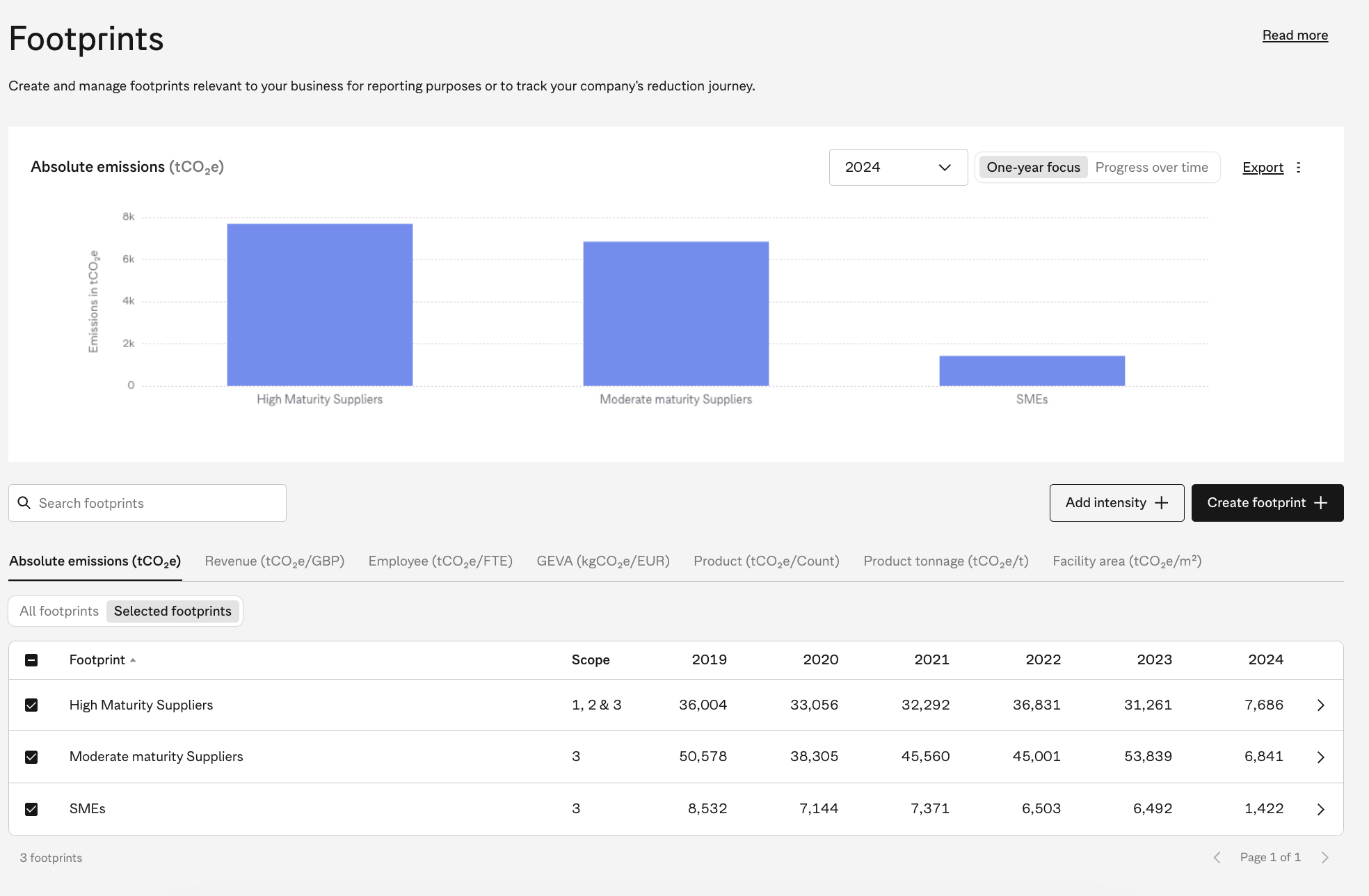
Engagement should feel collaborative, not punitive. To take SMEs as an example, they often simply lack the expertise or resources to start reporting. Clear communication, phased expectations, and small wins can turn scepticism into participation.
Data paralysis: when does the pursuit of perfection become a hindrance?
As a climate strategist, data is key: it enables me to advise my clients to take data-driven decisions and ensures the correct course of action is pursued. However, in the realm of climate change and our global goal of Net Zero by 2050, we often lack the perfect data or the technology to fully support every decision now.
Crucially, no data is a data point in itself. That absence should not be an excuse to wait for suppliers to be pushed by new regulations to provide information. Instead, companies must acknowledge the current limitations and proactively set clear guidelines and expectations both internally (e.g., through procurement policies) and externally (for new and existing suppliers). This strategic approach is imperative for achieving decarbonization goals, even when data is imperfect.
Next steps: AI as an accelerator
Ultimately, from my experience AI is most effective when paired with human engagement. It can identify opportunities and risks, but it takes people to turn those insights into action.
The most important thing to remember is that you can’t expect AI to solve your scope 3 challenges alone. Any organization needs to focus on the essentials of a strong supplier engagement strategy, and how AI can enhance that. So dedicate your time to ensuring that your suppliers feel like they are partners in your climate strategy. Building trust and capability within your supply chain will deliver greater long-term impact than any short-term data shortcut. Focus on setting clear timelines, offer incentives such as preferential contract terms or public recognition, and embed climate criteria directly into procurement decisions.
AI can help you monitor progress, track improvements, and pinpoint lagging suppliers, but collaboration will always be the driver of real decarbonization.
Key takeaways
- AI is an accelerator, not a replacement. It enhances visibility but doesn’t eliminate the need for supplier engagement.
- Define minimum data requirements. Knowing what “usable data” means protects against poor-quality inputs.
- Segment your suppliers. Tailor your approach based on data maturity and emissions significance.
- Support SMEs. Simplify asks, provide tools, and recognize progress.
- Embed sustainability in procurement. Contracts and governance are key levers for change.
Take your next step: start engaging your supply chain today
Watch our webinar, in partnership with EcoVadis, to pick up top tips, tools and templates that you can use to tackle scope 3 emissions with your suppliers.
FAQs
No. It can help you find and extract data efficiently, but reliable reporting still depends on supplier collaboration and verification.
At least scope 1–2 emissions, relevant scope 3 categories, methodologies, reporting period, and verification status.
The approach to SMEs must prioritize enablement over enforcement.
The goal must be gradual improvement, not perfection on day one. This means starting small, offering direct guidance, and creating financial incentives.
There is significant momentum in this area, particularly in the UK, where organizations like the Bankers for Net Zero initiative are actively providing clear guidance and dedicated support. Its latest publication, ‘From Burden to Benefit: Streamlining SME Data Sharing to Unlock Green Finance & Economic Incentives,’ is a good example of work being done to turn compliance into a commercial advantage for smaller companies.
Not necessarily. Since EEIO spend-based emission factors (like Exiobase) represent the industry average, a supplier’s actual footprint may be lower, but it could also be significantly higher. That’s why simply requesting data is insufficient. It is crucial to implement the right governance tools and support mechanisms to empower suppliers to set their own reduction targets and commit to taking action.