Normative launches Product Carbon Footprint service to drive profitable decarbonization
Product-level carbon data is critical for effective decarbonization. Discover how Normative delivers auditable Product Carbon Footprints.

Calculating your business’ carbon emissions is no longer enough to remain competitive and compliant. In a world where over 40% of global market capitalization is now committed to Science Based Targets, businesses need to make the transition from measuring to managing, using data to drive real decarbonization, operational and financial results. This is why Normative is launching its Product Carbon Footprint offering, to lay the foundations for businesses to deliver the granularity and accuracy that is so pivotal to profitable decarbonization.
Our GHGP-protocol-certified climate experts, in tandem with Normative’s carbon management platform, will guide your business through the process and deliver a Product Carbon Footprint aligned with the GHGP Product Carbon Footprint Standard and the PACT methodology.
To understand how Product Carbon Footprints work, why they matter, and how Normative enables credible product level reporting, this article provides a practical breakdown.
What is a Product Carbon Footprint?
A Product Carbon Footprint (PCF) is a subset of an Environmental Product Declaration (EPD), which is a way to represent a life cycle analysis of a product. While the latter covers broader environmental aspects such as biodiversity, PCFs focus only on carbon emissions.
As defined by the Partnership for Carbon Transparency (PACT), a Product Carbon Footprint:
- Measures the total GHG emissions of a product in CO2e
- Covers the emissions generated during different lifecycle stages of a product
- Can be calculated for any product, regardless of complexity
This means that rather than using industry averages to calculate emissions, businesses gather primary activity data and primary emission factors that show the specific impact of a specific activity.
Why are Product Carbon Footprints important?
The greater granularity and accuracy that this primary activity data provides will have a positive impact across a number of different aspects of a business. It plays an important role in empowering:
Credible decarbonization progress: many businesses calculate emissions using the spend-based carbon accounting methodology, based on industry average emission factors. While it’s a natural starting point for businesses it provides the most basic emissions estimation and often means reduction targets are based on inflated figures – in a recent engagement with a higher education organization, Normative delivered calculations that were 72% lower than those using a spend-based tool commonly used in the industry, HESCET. This not only makes it impossible to track real progress against reduction initiatives, it can also open businesses up to greenwashing claims, risks that product-level data can negate.
Revenue generation: 90% of FTSE 100 businesses already include ESG in tenders, so having a credible carbon footprint can open the door to new business opportunities. Going further and incorporating more primary emissions data could give a business the edge over other bidders by assuring prospective customers that they present a low-risk, compliant supplier that will help them meet their reduction targets.
Mitigating risk and inefficiencies in supply chains: Businesses with product-level data can identify emissions hotspots and the suppliers that have the biggest impact on their carbon footprint. This allows businesses to plan which suppliers they can work with to reduce their emissions, while simultaneously giving them leverage to negotiate for better deals and make cost savings.
Compliance: Regulations and frameworks such as the Science Based Targets initiative for Forest, Land and Agriculture and the Greenhouse Gas Protocol land-sector guidance are demanding greater granularity in carbon emissions reporting, such as expecting businesses to isolate land-related emissions. A reliable Product Carbon Footprint will set businesses up to meet these increasingly complex requirements.
What Normative’s PCF offering can deliver for businesses
Normative’s Product Carbon Footprint offering is designed to meet these environmental, competitive and regulatory imperatives head on.
A dedicated GHGP-certified climate strategy expert will work with your business and the Normative carbon management platform to deliver:
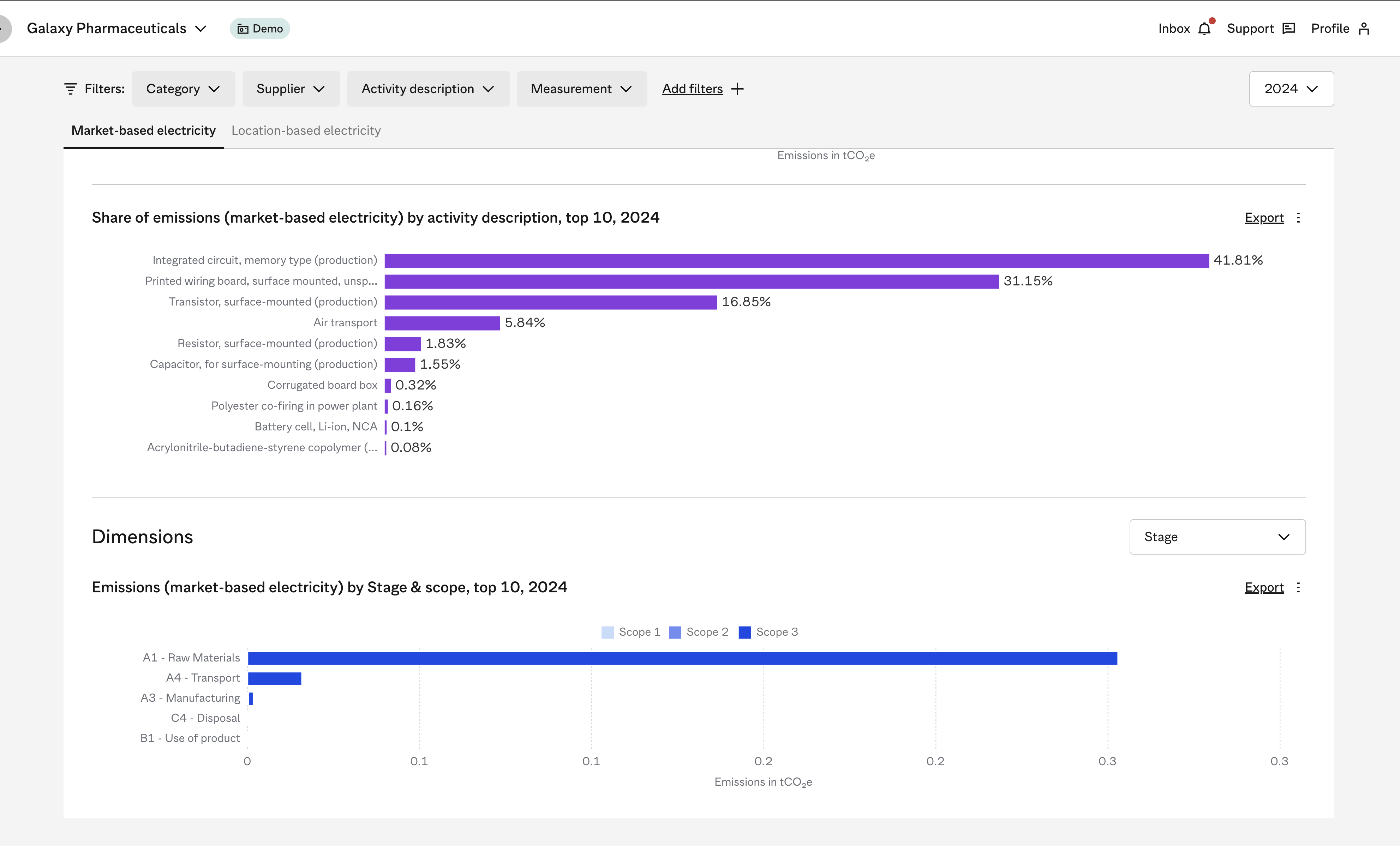
- A credible product footprint aligned with the PACT (Partnership for Carbon Transparency) methodology and the GHG Protocol Product Standard. Normative delivers a cradle-to-gate footprint based on Bill-of-Materials data, that will provide a strong foundation for reliable reporting at the product-level. This includes the calculation of emissions generated at each of the three stages of delivering a final product:
- Raw material acquisition
- Transportation
- Assembly and manufacturing
- Transparent methodology where all emission factors, extrapolations and assumptions are documented to deliver the highest level of transparency, data quality and results that are ready for disclosure
- PACT-aligned report that comprises of inputs, results and methodology to ensure stakeholders understand the product-level climate impact
How can businesses use Normative’s PCF offering to their advantage?
Meet customer demands. First and foremost, being able to produce an accurate, audit-proof Product Carbon Footprint will help any businesses meet the expectations of its current and prospective customers. If a business can prove its climate impact through primary data, rather than providing less accurate spend-based estimates, it will be in a far stronger position in many procurement processes.
Get a competitive edge in product development. When developing a new product, an accurate Product Carbon Footprint can allow businesses to model which of the prototypes will generate the least carbon emissions, before going to market. Users can use the Normative platform to compare which prototype is favorable, and even assess how the carbon emissions of the product could vary depending on the country in which it is developed. This can prove to be a critical competitive advantage in a market where businesses are increasingly aware of the climate risks in their supply chain. McKinsey even states that up to 20% in economic profit could be at risk by 2030 for companies that fail to decarbonize. With these financial risks in mind, many businesses will see great appeal in purchasing more sustainable products.

Which businesses are PCFs most relevant to?
Any business that is involved in one of the stages of the development of a product, should pay particular attention to calculating Product Carbon Footprints.
This can be manufacturing businesses, for example, that work directly with raw materials to build a product. It can also extend to sectors such as food and beverage or retail among others, where organizations could be involved in growing, packaging or transporting a product.
These types of businesses often have highly complex supply chains to deal with; the more accurate, granular view of emissions that PCFs provide, the more attractive a proposition they will be to work with.
How can I start calculating PCFs with Normative?
Once a business is a Normative customer, they can access our PCF offering. A dedicated Climate Strategy Advisor will be assigned to guide the process and use Normative’s PCF Calculator to work out the final Product Carbon Footprint, based on the business’ Bill of Materials data.
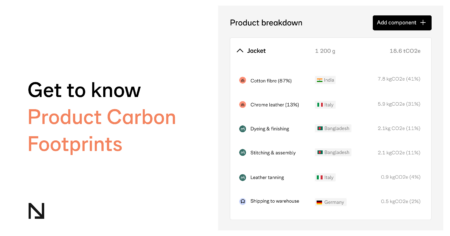
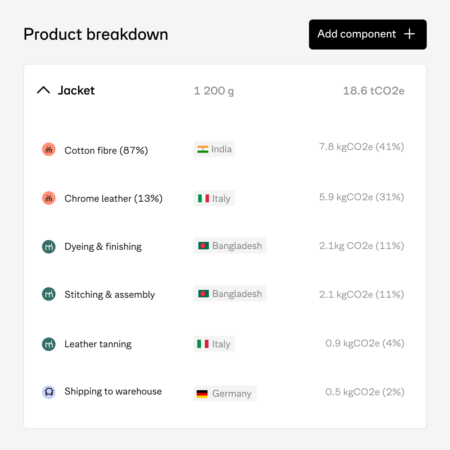
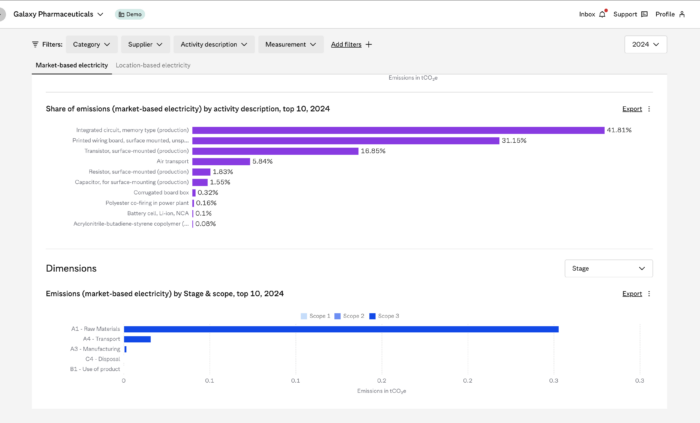
Not only will customers get a PACT-aligned report to share with key stakeholders, they will also be able to visualize the proportion of emissions contributed at each stage of the product development lifecycle through our Insights module in the Normative carbon management platform.
What is your Product Carbon Footprint? Talk to our experts
Get a tailored consultation with a climate specialist to understand how expert guidance combined with Normative’s carbon management platform can deliver the product-level reporting your business needs.
FAQs
A Product Carbon Footprint uses primary activity data and primary emission factors to calculate the total GHG emissions of a product in CO2e. This covers emissions generated at each stage of a product’s lifecycle.
To calculate the carbon footprint of a product, you must first ensure your methodology is in line with PACT and the GHG Protocol Product Standard. Next, a structured data collection and management process should take place where product-specific datasets are validated, including operational data and a complete bill of materials. Data sources , assumptions and proxies should be documented throughout the process to ensure transparency, once the final calculations are made.
Businesses involved in one of the development stages of a product, such as working with raw materials, growing, transporting or packaging should pay particular attention to developing a Product Carbon Footprint. This typically involves industries such as manufacturing, food and beverage and retail.
If your business can’t calculate Product Carbon Footprints, focus on how to optimize your supplier engagement process to fill primary data gaps. Speak with an expert climate strategist from Normative to plan your next steps.
Work with our team of climate strategy advisors and Normative’s carbon management platform to get a cradle-to-gate footprint aligned with PACT and the GHG Protocol Product Standard.