Normative PCF is live: one platform for your corporate and product carbon footprints
Find out how Normative can put you back in control of the PCF process.

Your biggest customer just asked for product carbon footprint data on your products. By the end of the quarter. And the procurement question that follows is just as hard: do you really need to buy a second carbon platform to answer it?
You don’t. We’re launching Normative PCF, AI-powered product carbon footprint software built for companies with physical products, overstretched sustainability teams and product designers, and deadlines that were already named in the request email. And because it runs inside the same platform as your corporate carbon footprint, there is no second tool to buy, no second methodology to defend, and no second login to remember.
Building on our expertise as the original player in the carbon accounting space, Normative PCF channels the scientific integrity that underpins our verified carbon accounting platform, and the deep industry expertise across our teams of sustainability engineers, product and GHGP-certified climate strategy professionals. So not only can you rely on us for corporate carbon footprints that can stand up to the scrutiny of auditors, customers and investors – you can deliver PCFs to the same high standard.
Here’s what it does, and why we built it.
Introducing Normative PCF
We built Normative PCF for the sustainability team who received that email and thought: there has to be a better way to do this.
There is. And as of today, it’s live.
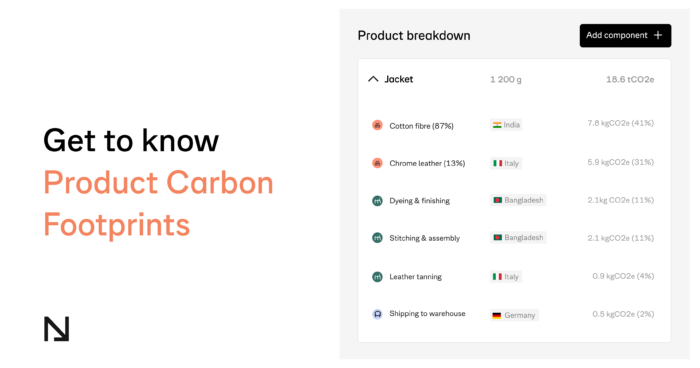
Normative PCF is AI-powered product carbon footprint software that enables companies with physical products to calculate, understand and reduce the emissions embedded in what they make, without needing LCA specialists. Here’s what the tool does:
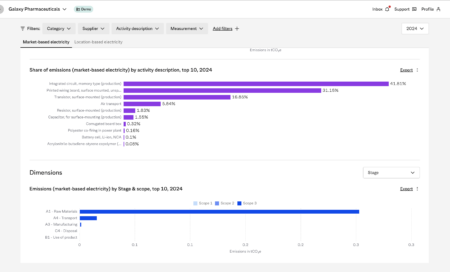
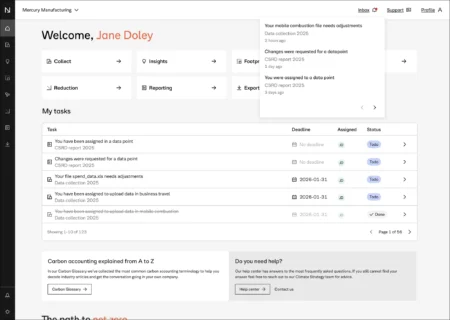
- One platform for PCF and corporate carbon footprint. Manage PCFs in the same platform as your corporate carbon footprint – same login, same emission factors, same methodology, same audit trail. No second procurement cycle, no second tool to integrate, no reconciliation between two different sets of numbers when your auditor asks.
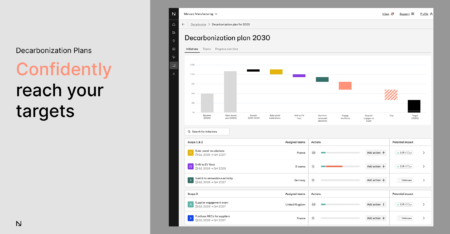
- Puts you back in control of the PCF process. Previously you’d have to leverage external consultants working with people outside of your company to make decisions that impact your sustainability program. Now you can take back that control by managing PCFs in one central system, and pulling product-level data in time to make sustainability-led decisions in your business.
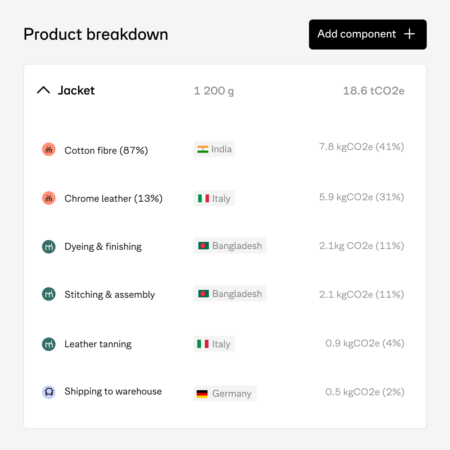
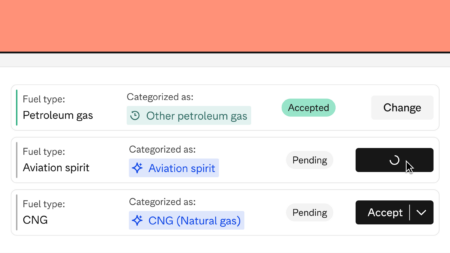
- Reads your Bill of Materials (BOM) directly. Upload your BOM in whatever format you have it – by cost item, material, component, or ingredient – and AI automatically maps materials and components to emission factors. In our beta programme, 100% of participating customers named data ingestion and emission factor matching as the single biggest bottleneck in their existing process. We have worked to remove that bottleneck so that you could get results instantaneously with no need to wait three months for a PDF from your consultant.
- Delivers compliant PCFs. Normative’s PCF tool is built according to the ISO 14067, and there are plans for our platform to be audited against the standard in the near future, to ensure we retain the highest standards. At the same time, our team is working on making Normative PCFs PACT-conformant, so you can easily share the results with suppliers, customers and any other interested stakeholders.
Carbon accounting software should include product carbon footprints as a core functionality. For companies that make physical products, product-level emissions are where you can make carbon reductions, and this is exactly what we’ve been hearing from our customers.
The PCF request, and what it used to take
It arrives on a Tuesday. The subject line is polite, procurement teams always are, but the ask is not small: PCF data on several of your products, by end of quarter.
Instantly you think: do we have budget for this? Do we have a tool that can handle it? Do we have anywhere near the capacity or skills within our team?
A product carbon footprint (PCF) is a measure of the greenhouse gas emissions generated across a product’s lifecycle, from raw materials and manufacturing through to distribution. It is the number your customers are starting to require, your regulators are beginning to mandate, and your current toolkit was not built to produce.
Until now, producing a PCF meant:
- Calling an LCA consultancy (typically you could be paying €10,000-€30,000 per product, for reports delivered in weeks or months)
- Wrestling with standalone LCA software built for specialists
- Or building it in a spreadsheet that produces three different numbers depending on who ran it
None of those options hold up at portfolio scale. None were designed for an overstretched sustainability team, or individual, against a deadline imposed by a customer or a regulator.
Why now: the competitive and regulatory window
The PCF data request is not an isolated event.
CSRD Wave 2 is underway. Companies that filed their first disclosures in 2025 are now working backwards through their supply chains, and the way they close the Scope 3 Category 1 gap is by collecting PCF data from suppliers.
CBAM is already live for manufacturers exporting to the EU. The EU Digital Product Passport arrives in 2027, requiring machine-readable environmental data on every physical product sold in the European market. The EU Green Claims Directive (expected H2 2026) means any environmental marketing claim must be substantiated with verified product-level data.
And that’s just the drivers from the regulators. Many businesses are now expecting product-level emissions data from their suppliers, and the companies ahead of you are already using PCF capability as a procurement differentiator – not because regulators forced them to, but because it is helping them refine their scope 3 reporting and win business. The question is not whether to build PCF capability. It is whether you will have an answer before the window closes.
Ready to answer the next email?
Normative PCF gives sustainability teams product carbon data, without the consultancy bill after a multi-month wait, the spreadsheet that breaks at any kind of scale, or the second procurement cycle.
FAQs
Product carbon footprint (PCF) software enables companies to calculate the greenhouse gas emissions generated by a specific product across its lifecycle, from raw materials and manufacturing through to distribution. Unlike corporate carbon accounting tools, which measure emissions at the organization level, PCF software works at the product and Bill of Materials level, producing a result per SKU that can be shared with customers, regulators, or auditors. Normative PCF uses AI-powered BOM ingestion to enable sustainability teams to produce auditable PCFs without LCA specialists.
A traditional LCA consultancy engagement can typically cost €10,000-€30,000 per product and takes weeks or months to deliver. The methodology lives with the consultant. When your product changes or a new customer request arrives, the process starts again. Normative PCF puts the methodology in your hands: upload your Bill of Materials, AI maps materials to emission factors, and you generate an auditable PCF without waiting on a third party. When your product range changes, you update the calculation yourself. All of that included in the Normative Platform, not requiring you to procure two separate systems for making PCFs and your Corporate Carbon Footprint.
Normative PCFs are compliant with ISO 14067, with an audit on the way. The tool will also be able to produce PACT-conformant PCFs.
Normative PCF is built for sustainability and product teams at companies with physical product portfolios or those in the manufacturing industry. Companies currently working with the product include manufacturers in furniture, consumer electronics, food and beverage, and promotional goods.