Decarbonization Plans: execute against your climate targets
Have you had your SBTi targets validated? Are customers or procurement asking for evidence of carbon reductions? Normative’s Decarbonization Plans is here to ensure you meet your targets.

What is a decarbonization plan?
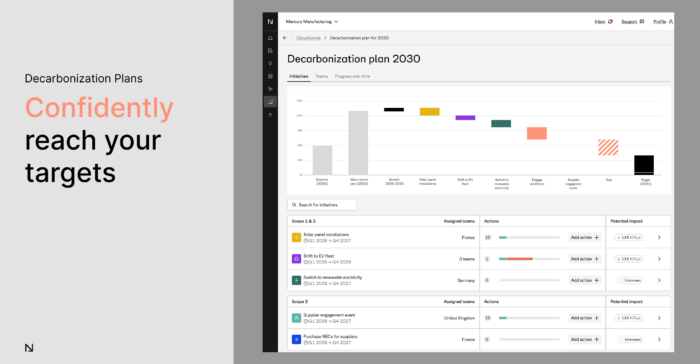
A decarbonization plan is a structured roadmap that defines the specific actions, timelines, and responsibilities a company will follow to reduce its greenhouse gas emissions in line with its climate targets.
Let’s imagine for a minute that the work of planning and executing decarbonization plans stopped being a side project and became the core work of sustainability teams. They could put a spotlight on who is accountable for what and when. When someone asks whether the company is on track, the answer is already on the screen. Above all, busy sustainability teams get time back that they otherwise would have spent following up with colleagues for updates.
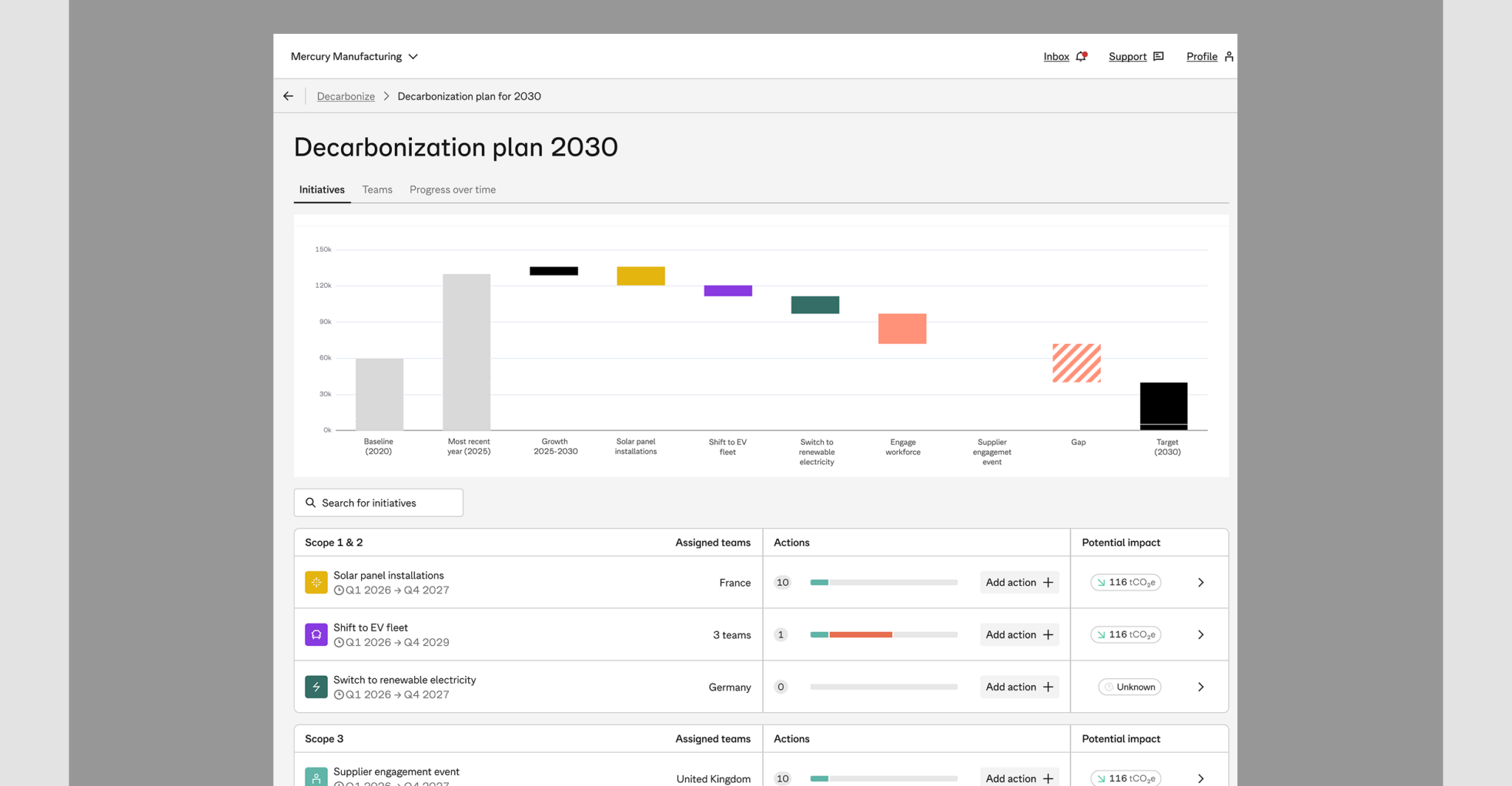
Introducing Decarbonization Plans
At Normative, we’ve seen our customers make real progress on executing against their targets. Now we want to help them, and other companies, go further on the path to making tangible reductions. That’s why we’ve built Decarbonization Plans.
It provides an execution layer within carbon accounting that is essential in order to reach targets: a place where the plan lives in the same platform as the emissions data you already trust. Two things make that work:
- One source of truth, so the plan sits next to the data that defines the target rather than in a separate document or tool. Imagine if you never had to say, ‘Let me double check that and get back to you’ again.
- Shared accountability, so teams own their actions and see their own contribution to the whole. This supports visibility for decarbonization efforts being done across our customer’s organization. It also has the benefit of ensuring the work invested in sustainability is felt and known within your organization.
Companies aren’t alone in figuring out how to reach targets
Every person we’ve spoken to when working on Decarbonization Plans has already done one side of the reduction equation: they’ve measured their emissions. They’ve also done the work of setting the targets. They convinced their teammates up and across their organization to commit, sometimes even publicly. That work can feel daunting, and it rarely comes with much applause because sustainability data can feel complex to people not working directly with it. But the incredible sustainability teams we’ve spoken to are not alone: more and more organizations are setting ambitious targets.
Sustainability teams are already using Normative to measure their scope 1, 2, and 3 emissions, model where reduction scenarios are, and now they can set targets. In fact, we have a team of Climate Strategy Advisors who have guided our customers on finding reduction opportunities: now those same opportunities can live in one platform.
“I see a growing need from customers to set their reduction roadmap. Regulatory push, investors, RFPs in customer tenders and the list goes on. The Decarbonisation Plan allows my customers to bring their entire roadmap alive and democratise action across the company at the same time. Achieving your targets is not the sole responsibility of the sustainability team; it’s a company-wide effort, with the sustainability manager acting as the maestro of this complex orchestra.”
Dimitris Stoidis, Climate Strategy Advisor, Normative

Over 10,000 companies have set science-based targets
The numbers say the same thing. More than 10,000 companies have now set targets through the Science Based Targets initiative, and the number that have set both near-term and net-zero targets surged 227 percent between the end of 2023 and the end of Q2 2025. The ambition is set. A whole market of companies has arrived at the same threshold at once, and they are all asking the same question: how do we deliver on what we committed to? Delivering is the open question. Only 67 percent of companies are on track for their scope 1 and 2 emission targets, and just 54 percent for scope 3 emissions. This is where the gap between ambition and execution lives, and we’re excited to work with leaders in sustainability to solve this challenge.
Start meeting your decarbonization targets
Take control of your business’ progress against its climate targets. One source of truth, shared accountability, real reductions. See Normative’s Decarbonization Plans in action today.
FAQs
A decarbonization plan is a structured roadmap that defines the actions, timelines, and ownership a company will use to reduce its greenhouse gas emissions in line with its climate targets. Unlike a spreadsheet or standalone document, a plan embedded in your carbon accounting platform lets you track progress against your actual emissions data in one place, so strategy and execution stay connected.
Setting a target is the commitment; a decarbonization plan is how you deliver on it. Once targets are set, companies need to identify specific initiatives such as energy efficiency, supply chain engagement, and renewable procurement, before assigning ownership across teams and tracking progress regularly. Without that execution layer, targets remain aspirational rather than operational.
The most effective approach is to manage both the emissions data and the reduction plan within the same platform, so that progress is visible in real-time without manual consolidation. Normative’s Decarbonization Plans connects scope 1, 2, and 3 emissions data with the specific actions teams are taking, giving sustainability managers a live view of the gap between current performance and the target.
We recommend starting with one plan to get a complete view of the gap to target and so that every team can see each other’s commitments. Some companies choose to run a separate plan for scope 3 given the different nature of those reductions, but starting with a consolidated approach tends to drive clearer accountability across the business.