SBTi scope 3 requirements: what you need to measure

From coverage to specific requirements, here is what you need to know to secure SBTi validation, from one of Normative’s GHGP-certified experts.

Definitions
What is SBTi?
SBTi (Science Based Targets initiative) is an independent body that validates corporate greenhouse gas reduction targets against climate science. An approved SBTi target is a publicly verified commitment to reduce emissions in line with limiting warming in line with climate science. Targets are increasingly required by investors, regulators, and supply chain partners.
What are scope 3 emissions?
Scope 3 emissions are indirect emissions across a company’s entire value chain, including upstream (supply chain, business travel, purchased goods and services) and downstream (use of sold products, distribution, end-of-life). They are measured across 15 categories under the GHG Protocol Corporate Value Chain (Scope 3) Standard.
What are SBTi scope 3 requirements?
SBTi scope 3 requirements come into play when your Scope 3 emissions represent 40% or more of your total emissions (Scope 1, 2, and 3 combined). In practice, this threshold is almost always exceeded.
When SBTi scope 3 targets become mandatory
Crossing the 40% threshold is only the starting point. The targets you set must also cover a sufficient portion of those scope 3 emissions:
- Near-term targets (5–10 years): must cover at least 67% of total Scope 3 emissions
- Long-term / net-zero targets: coverage must increase to at least 90% of total Scope 3
This coverage requirement means that businesses cannot set a target covering one or two categories and expect it to pass review. Your largest emission categories must be included, with verifiable data to support them.
How could the Corporate Net-Zero Standard (V2) impact scope 3 coverage?
SBTi’s proposed revision to the Corporate Net-Zero Standard (V2) includes a discussion on extending the long-term boundary to 100% Scope 3 coverage, reflecting full value chain responsibility.
Get expert guidance through the SBTi process
Normative’s customers have a 100% SBTi validation rate. Working with experienced advisers who know the coverage requirements and what reviewers scrutinise means you do not have to discover these thresholds under submission pressure.
Which scope 3 categories are required by SBTi?
The GHG Protocol defines 15 Scope 3 categories across upstream (Categories 1-8) and downstream (Categories 9-15), and SBTi expects you to measure emissions for any categories deemed as relevant.
What SBTi expects when you exclude a category
You cannot simply ignore a category because data is difficult to find. Reviewers expect a quantitative screening to justify why a category is considered “immaterial”. In the world of carbon accounting, “immaterial” doesn’t just mean “small” – it means the category is insignificant enough that its exclusion won’t change the overall picture of your company’s climate impact or mislead stakeholders.
The Science Based Targets initiative and the GHG Protocol have strict rules about how you prove a category is immaterial. You can’t just “vibe check” it; you need data to back up the exclusion. To justify leaving a category out, the sum of all excluded scope 3 categories must not exceed 5% or your total scope 3 footprint.
The FLAG threshold: an additional obligation
If your Forest, Land and Agriculture (FLAG) emissions exceed 20% of your total footprint, SBTi requires a separate FLAG-specific target in addition to your standard scope 3 targets. This is not just limited to agricultural producers though: food retailers, hospitality groups, and even some apparel brands that rely heavily on natural fibers might fall within the scope of FLAG.
100% of our customers meet SBTi Scope 3 requirements
We help you identify which of the 15 GHG Protocol categories apply, build your data improvement plan, and hit the coverage thresholds your SBTi target requires.
How to calculate scope 3 for SBTi approval
SBTi’s data quality standards for scope 3
SBTi does not require perfect data from the start. However, they expect a credible, documented plan for improving data quality over time, and a methodology that can be defended. To make this more tangible, here are the different data types you could use to report to SBTi, with option 1 being the most accurate.
- Product-specific data: Data from EPDs, LCAs or PCFs.
- Supplier-specific data: Supplier emission intensities.
- Activity-based data: Physical quantities matched to emissions factors.
- Spend-based estimates: Accepted, but with documented caveats.
Spend-based data is accepted for SBTi submission but there must be a recognition that this approach cannot be supported in the long-term. Spend-based data is a good starting place for many businesses to understand emission hotspots, but there must be a plan to transition towards more accurate approaches.
So, don’t lose sleep over having perfect data but make sure you’re focused on building a clear plan for improvement, documented by category. Reviewers expect to see an acknowledgement of current data quality, gaps identified, and staged improvement planned.
Supplier engagement as a formal SBTi commitment
There is a target option called the supplier engagement target, that commits your organization to working with value chain partners to set their own science-based targets within five years of your SBTi submission. It is a core part of the SBTi Scope 3 framework, not a workaround, and it works best when treated as a procurement strategy from the outset, not a data collection exercise added late.
So, what are the pitfalls you need to look out for when reporting on Scope 3 for SBTi?
See how Normative supports supply chain engagement
Collect and analyze your supplier emissions throughout your value chain to deliver reports you can trust and inform reduction strategies you can action.
Find out more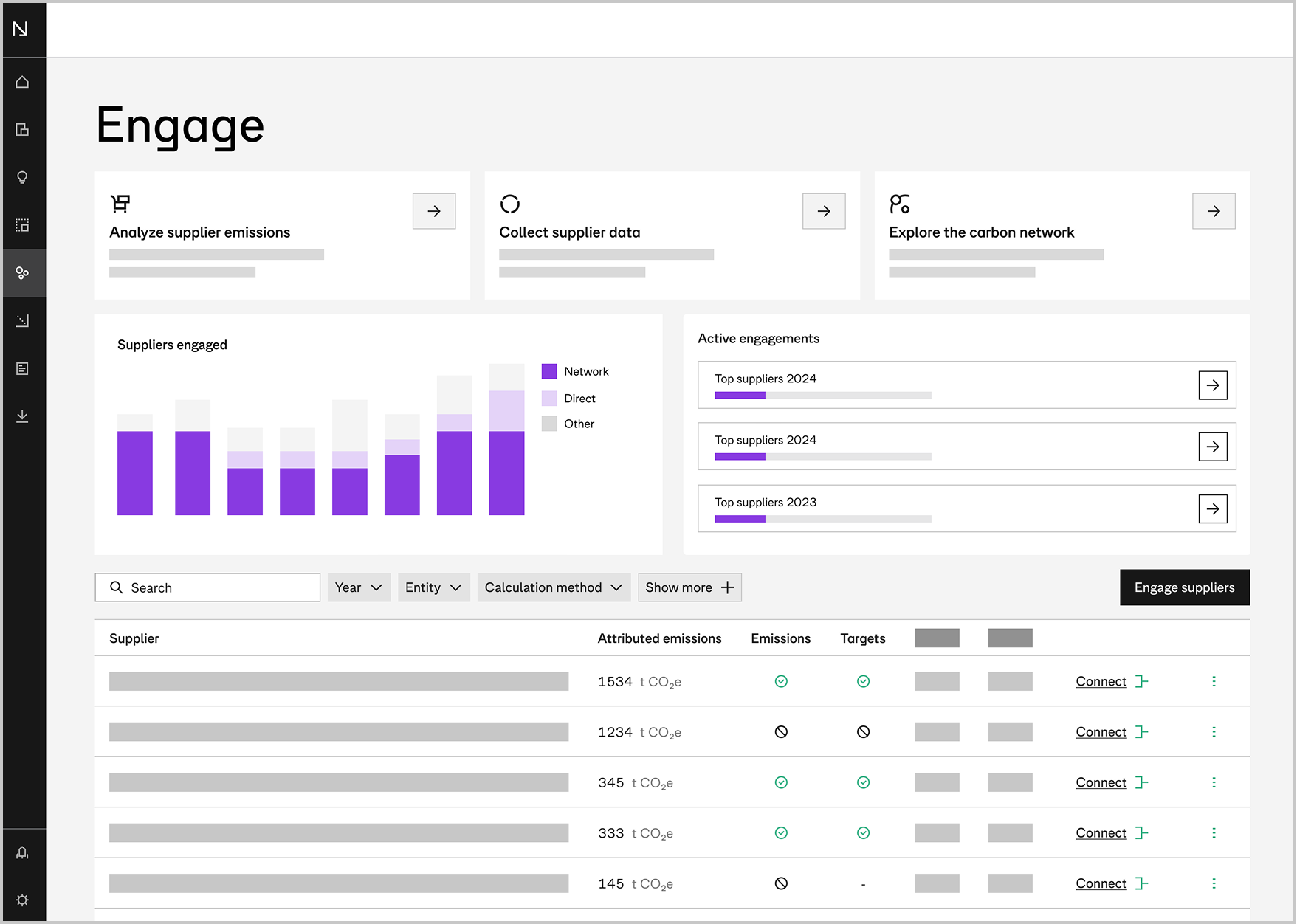
Common SBTi scope 3 challenges
- Incomplete category screening. Submitting without documenting why excluded categories are immaterial is a common source of Technical Queries. Make sure you screen all 15 categories and justify each exclusion with quantitative evidence.
- No data improvement plan for spend-based data. Using spend-based estimates without a documented pathway toward activity-based data raises immediate flags. SBTi’s expectation is a credible trajectory, not perfection on day one.
- Switching emission factors before establishing the base year. Changing your carbon accounting methodology or platform before locking in your base year creates year-on-year inconsistencies that are difficult to defend at review.
- A base year that is too old. SBTi requires the base year to be no more than two years prior to the year of submission. A stale or data-poor base year creates problems that compound throughout the submission process.
- Treating supplier engagement as optional. The five-year supplier engagement commitment is a formal SBTi target type, not a soft intention. Plan for it from the start to prevent it becoming a sticking point for reviewers.
- Overlooking mandatory sector-specific boundaries. Relying solely on general SBTi criteria is a common mistake for companies in high-impact industries. If your business has significant exposure to sectors like Steel, Cement, Buildings or Financial Institutions, you are often required to follow specialized methodologies that override standard cross-sector rules.
Top tips for building your SBTi-ready scope 3 strategy
- Start with a materiality assessment across all 15 categories, not to exclude as many as possible, but to identify where your real emissions sit and where your data gaps are most significant. This shapes your coverage plan and surfaces FLAG obligations before submission.
- Build supplier engagement into your procurement process early. Suppliers in most sectors are still developing carbon accounting capabilities. Companies that embed this as a supplier selection and onboarding criterion, rather than a data collection campaign, build better data over time.
- Plan for staged, annual data quality improvement. SBTi targets operate across 5–10 years. Your data should systematically move up the quality hierarchy each year, reducing dependence on spend-based estimates and progressing toward primary data for your highest-emission categories.
- Align board-level sponsorship before submission. SBTi is a long-term commitment – annual disclosure, a five-year mandatory review, and potential resubmission if your business changes materially. It requires sustained executive ownership, not just sustainability team effort.
FAQs
Not every company, but most do. SBTi requires a scope 3 target when scope 3 emissions represent 40% or more of total emissions (scope 1, 2, and 3 combined). For a lot of businesses in industries like manufacturing, retail, and services companies, scope 3 represents a significant proportion of total emissions, meaning the 40% threshold is often triggered.
Near-term targets must cover at least 67% of total Scope 3 emissions. Long-term net-zero targets must cover at least 90%. A proposed V2 update discusses extending the long-term boundary to 100% coverage.
Yes, spend-based data is accepted, but you must document a credible plan for transitioning toward activity-based or supplier-specific data. Spend-based data creates a structural trajectory problem: your reduction pathway becomes dependent on your suppliers’ efficiency gains, which you cannot directly control or demonstrate.
The leading causes are: failing to screen all 15 GHG Protocol categories with documented justification for exclusions; insufficient data quality documentation; no credible improvement plan for spend-based data; inadequate supplier engagement planning; and a base year more than two years prior to submission.
A supplier engagement target is a formal SBTi commitment to work with value chain partners to set their own science-based targets within five years of your submission. It is designed for companies whose Category 1 (Purchased Goods and Services) data relies on spend-based or industry-average estimates and it is a core mechanism in SBTi’s approach to value chain decarbonization, not a workaround.
100% of our customers meet SBTi Scope 3 requirements
We help you identify which of the 15 GHG Protocol categories apply, build your data improvement plan, and hit the coverage thresholds your SBTi target requires.